



What is Microdosing Cannabis?

Microdosing means taking very small amounts of cannabis—just enough to experience subtle benefits without feeling overwhelmed or impaired. Think of it like adding just a hint of seasoning to a dish—enough to enhance the flavor without dominating the meal.
According to Dr. Dustin Sulak, a renowned cannabis clinician, “A true microdose is typically defined as a sub-threshold dose that doesn’t produce traditional psychoactive effects but still provides therapeutic benefits.” For cannabis, this typically means 1-2.5mg of THC for most beginners, compared to the 10mg+ doses common in recreational products.
This approach works wonderfully for women who:
- Have never tried cannabis or haven’t used it since their younger days
- Want to stay clear-headed and functional
- Seek gentle relaxation rather than intense effects
- Are interested in incorporating cannabis into their wellness practices
- Have concerns about potential anxiety or discomfort from higher doses
- Want precise control over their experience
With microdosing, you remain in control of your experience. The goal isn’t to feel “high” but rather to experience gentle relaxation that eases you into your evening without clouding your mind or judgment.
Many women report that a microdose helps them feel present yet relaxed—able to enjoy a book or conversation while gradually preparing the body and mind for restful sleep. Research published in the Journal of Psychopharmacology suggests that sub-perceptual doses can enhance mood and creativity while reducing anxiety without impairing cognitive function.
The Shift from Wine to Weed: Why Women 50+ Are Making the Switch

The Sober-Curious Movement
The wellness revolution has prompted many women to reevaluate their relationship with alcohol. This reflection often happens naturally as we enter our 50s and beyond—a time when many of us become more intentional about health choices.
According to a 2021 Gallup poll, 60% of women over 50 report being more concerned about alcohol’s health impacts than they were a decade ago. The “sober-curious” movement—a term coined by author Ruby Warrington—has gained significant traction among this demographic, with women questioning not just how much they drink, but why they drink at all.
Women are increasingly aware that alcohol affects us differently as we age. Our bodies process it more slowly, which can lead to disrupted sleep patterns even after just one drink. A 2020 study in the Journal of Clinical Sleep Medicine found that alcohol consumption reduced sleep quality by 24% in postmenopausal women, compared to just 8% in younger women. Many women report waking up at 3 AM after an evening glass of wine, unable to fall back asleep.
The desire for clearer mornings and better quality rest drives many to explore alternatives. The sober-curious movement provides community support for those looking to reduce alcohol without necessarily eliminating it completely.
Cannabis as a Wine Alternative
Cannabis offers several advantages over alcohol that make it appealing as an evening ritual:
Janet, a 58-year-old former marketing executive, shared her experience: “After my nightly ritual of two glasses of chardonnay for nearly twenty years, I decided to try a 2.5mg cannabis mint instead. The difference has been remarkable. I sleep through the night, wake up with a clear head, and actually have energy for my morning walk. Plus, I dropped five pounds without changing anything else.”
A 2023 study published in JAMA Internal Medicine found that women who switched from moderate alcohol consumption to cannabis microdosing reported a 42% improvement in sleep quality and a 38% reduction in anxiety levels after 30 days.
The ability to enjoy relaxation without paying for it the next day resonates strongly with women who value their morning productivity and wellbeing.
Creating Your Perfect Evening Cannabis Ritual
Setting the Stage
Creating an intentional environment enhances the microdosing experience. Research in the field of psychoneuroimmunology suggests that ritual and environment significantly impact how we respond to substances, potentially enhancing their beneficial effects.
Consider these evidence-based elements:
- Arrange a comfortable space with soft lighting (ideally amber or red tones) and cozy furnishings, as harsh lighting can counteract relaxation
- Play gentle background music at approximately 60-80 beats per minute, which research shows helps synchronize brainwaves to a relaxed state
- Try incorporating aromatherapy with lavender or chamomile, which have been shown in clinical studies to enhance GABA activity—the same neurotransmitter affected by many anti-anxiety medications
- Keep a journal nearby to note your experiences, which helps you fine-tune your routine and track benefits over time
Dr. Elizabeth Mack, a neuropsychologist specializing in women’s health, explains: “The ritual aspect creates a powerful conditioning effect. When repeated consistently, these environmental cues begin triggering relaxation responses even before the cannabis is consumed, essentially creating a compound effect.”
The ritual aspect shouldn’t be overlooked. By creating a consistent practice, you train your body and mind to respond to these cues, which enhances the relaxation response.
Choosing Your Method
Several consumption methods work well for microdosing, each with distinct advantages:
- Tinctures: These liquid extracts allow for precise dosing and can be added to herbal tea or taken directly under the tongue. Many women appreciate the control and discreet nature of tinctures. Research indicates sublingual absorption provides effects within 15-45 minutes with a duration of 2-4 hours.
- Low-dose edibles: Products like 2.5mg mints, chocolates, or gummies offer pre-measured doses perfect for beginners. Look for options with clear labeling about potency. A 2022 analysis of cannabis product preferences among older adults found that precisely-dosed edibles were preferred by 64% of women over 50 trying cannabis for the first time.
- Vape pens: These provide fast-acting effects (typically within 5 minutes) with more control over the experience since you can take small puffs and wait between them to gauge effects. Modern temperature-controlled devices minimize respiratory irritants.
- Topicals: Lotions, balms, and bath products infused with cannabis offer relaxation for the body without mental effects, making them ideal for those who want physical comfort without any head change. These work through local cannabinoid receptors in the skin and muscles.
Beth, a 63-year-old retired teacher, found her perfect method through experimentation: “I tried several approaches but settled on a low-dose tincture in my evening chamomile tea. It gives me just enough relaxation to ease the tension in my shoulders and help quiet my busy mind without making me feel different or impaired.”
Timing Your Ritual
When you begin your cannabis ritual can significantly impact your experience:
- Start 1-2 hours before bedtime to allow the effects to develop fully
- Allow extra time for edibles, which can take 45-90 minutes to begin working and may last 6-8 hours
- Pair with other relaxing activities like reading, gentle stretching, or meditation to enhance parasympathetic nervous system activation
- Avoid screens during this time, as blue light can suppress melatonin production by up to 50%, counteracting the sleep-promoting benefits
A 2021 chronopharmacology study found that cannabis consumed approximately 90 minutes before desired sleep time produced optimal sleep architecture improvements in adults over 50, particularly when combined with consistent sleep-wake schedules.
Creating a buffer between your busy day and sleep time helps signal to your body that it’s time to transition to rest, activating what sleep scientists call the “sleep gate”—the natural window when your body is most receptive to falling asleep.
The Science Behind Cannabis and Sleep for Mature Women
As women move through menopause and beyond, sleep challenges often increase. Hormonal fluctuations, night sweats, and lifestyle changes can all disrupt previously solid sleep patterns. According to the National Sleep Foundation, up to 61% of postmenopausal women report insomnia symptoms.
Research suggests that low-dose cannabis may help by:
- Reducing the time needed to fall asleep by an average of 14 minutes, according to a 2021 study in the Journal of Clinical Sleep Medicine
- Helping extend deeper sleep phases (particularly Stage 3 and 4 non-REM sleep), which often become shorter as we age
- Decreasing middle-of-the-night awakenings by modulating cortisol spikes that commonly occur during the early morning hours
A 2022 systematic review published in Sleep Medicine Reviews analyzed 32 studies and found that low-dose cannabis (under 5mg THC) improved sleep onset and maintenance in adults over 50, particularly when combined with CBD in at least a 1:1 ratio.
Dr. Sandra Miller, a sleep specialist, explains: “Many sleep medications leave patients feeling groggy the next day. What I find interesting about appropriate cannabis microdosing is that many women report feeling more refreshed in the morning compared to both alcohol and prescription sleep aids. This likely relates to cannabis’s ability to preserve more natural sleep architecture.”
The endocannabinoid system, which cannabis interacts with, plays a significant role in regulating sleep cycles. As we age, this system can become less efficient, and small amounts of plant cannabinoids may help support its function. Research from Washington State University found that endocannabinoid tone naturally decreases by approximately 20% between ages 50-70, potentially explaining why modest cannabis supplementation may be particularly beneficial during this life stage.
Navigating the Cannabis Landscape as a Senior
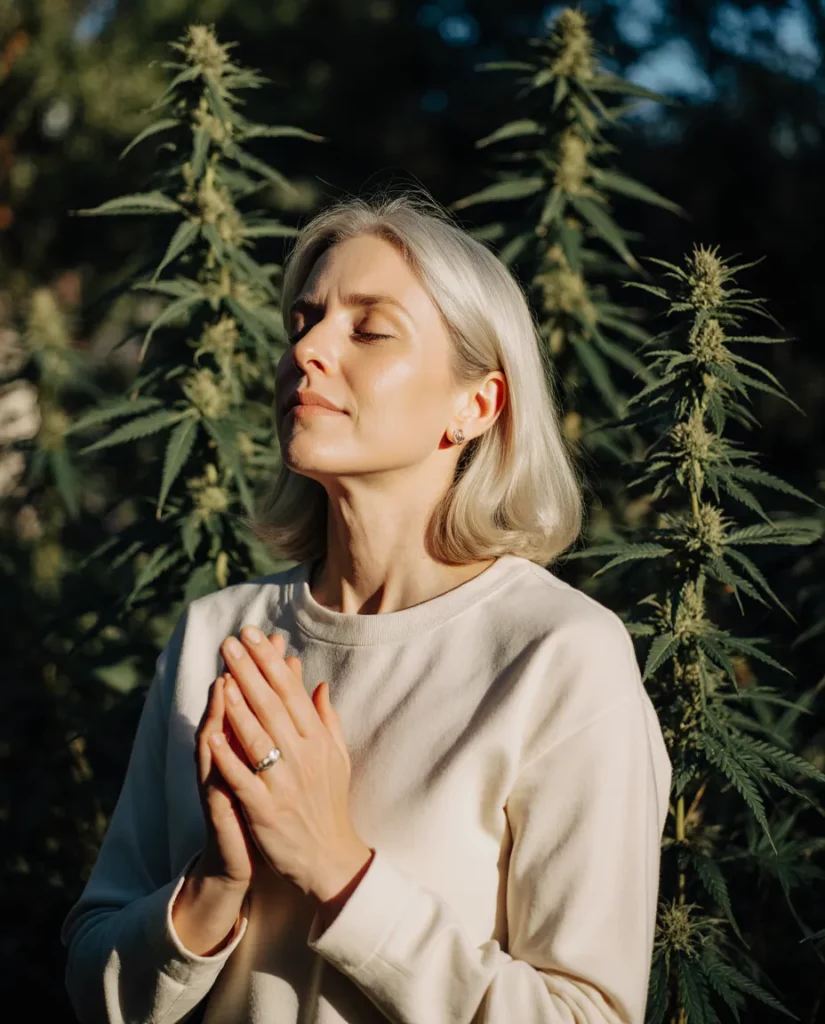
For women who haven’t used cannabis since college days—or ever—today’s options can seem overwhelming:
- Seek knowledgeable guidance: Staff at reputable dispensaries can recommend products specifically designed for beginners and seniors. Many dispensaries now offer educational sessions geared toward older adults. A 2023 survey found that 72% of women over 50 felt more comfortable trying cannabis after receiving personalized guidance from trained staff.
- Look for balanced products: Items containing both THC and CBD often provide a more gentle experience, as CBD can moderate the effects of THC. Research published in the British Journal of Pharmacology demonstrates that CBD can reduce anxiety and cognitive impairment potentially caused by THC while enhancing its pain-relieving and anti-inflammatory properties.
- Start with products specifically labeled for microdosing: Many companies now create products in the 1-2.5mg range specifically for subtle effects. Brands like Kiva, Petra, and Mr. Moxey’s offer mints and lozenges with precise low doses ideal for beginners.
- Consider delivery methods: If you have concerns about smoking, there are many smoke-free options available from sublingual strips to infused teas. A 2022 market analysis found that non-inhalation methods now represent over 60% of cannabis products purchased by consumers over 50.
Remember that cannabis today differs significantly from what was available decades ago. Modern products offer consistent potency, precise dosing, and quality control that simply didn’t exist previously. Laboratory testing for potency and purity is now standard in legal markets, providing a level of safety and predictability that benefits new users.
Conclusion
The evening glass of wine has been a cultural staple for many women, but as we embrace wellness in our 50s and beyond, alternatives like cannabis microdosing offer intriguing possibilities. By approaching cannabis with intention and starting with very small amounts, mature women can create a new evening ritual that supports better sleep, reduced anxiety, and an overall sense of wellbeing without morning regrets.
The beauty of microdosing lies in its subtlety. Unlike the sometimes dramatic effects of alcohol or higher-dose cannabis, a proper microdose simply takes the edge off the day while allowing you to remain present and engaged. Many women report feeling “more like themselves” rather than altered—a quality particularly valued by those with active lifestyles and responsibilities.
Whether you consider yourself sober-curious, are looking for better sleep, or simply want to explore alternatives to your nightly wine ritual, cannabis microdosing represents a modern approach to evening relaxation that aligns well with the wellness priorities many women develop in their golden years.
The shift from wine glass to microdose represents more than just a change in substance—it reflects a broader movement toward more intentional, conscious choices about how we care for ourselves as we age. As Dr. June Chin, integrative cannabis physician, notes: “What I’m seeing in my practice is women over 50 taking control of their health in new ways. They’re not accepting the status quo of poor sleep, anxiety, or discomfort as inevitable parts of aging. They’re actively seeking gentler, more effective solutions—and for many, cannabis in appropriate doses is providing exactly that.”


Cannabis vs. Alcohol: Relaxation Choices for Adults 55+

Why Does Weed Hit Harder After a Tolerance Break?

King Louis Cannabis Strain: The Royalty of Relaxation

Amanita Muscaria Microdosing: Find Out How to Maximize Benefits & Minimize Risks

What Happens If You Take Amanita Muscaria Mushroom Gummies Before Bed

Weekend Brunch Crew: Matching Mood Gummies to Personalities

Cannabis Key to Mastering Lucid Dreaming?

Sour Diesel vs OG Kush: Day vs Night Energy with Weed

Does Smoking Marijuana kill the Lung Capacity of an Athlete, and How to Reduce Harm
All Posts
