



Understanding “Fair” in Cannabis Sharing
Fair doesn’t always mean mathematically equal when splitting weed. The concept depends on several factors: financial contribution, who sourced the product, and social dynamics within your group. A friend who drove an hour to pick up from a trusted dispensary might reasonably expect a smaller contribution than others. The person hosting the session at their place brings value beyond money.
Context matters significantly. If one person bought the entire stash and is generously sharing, the “split” might actually be a gift with no expectation of equal division. When friends pool money specifically to purchase together, precise measurement becomes more important. Understanding these nuances prevents misunderstandings and keeps everyone satisfied with the arrangement.
Methods for Splitting Cannabis

The Weight-Based Split
Using a digital scale is the most objective method for dividing flower. Affordable milligram scales (accurate to 0.01g) are widely available and remove all ambiguity. Simply divide the total weight by the number of people and measure out equal portions. This works best when everyone contributed equally to the purchase.
For groups that regularly share, investing in a communal scale can be worthwhile. Keep it in a designated spot and make it available whenever splitting needs to happen. This transparency builds trust and prevents the “eyeballing” disputes that can arise when someone thinks their portion looks smaller. A quality scale costs $15-25 and eliminates years of potential conflicts.
The Contribution-Based System
This approach calculates shares based on who paid what. If three friends split a $60 eighth, and one person paid $30 while the other two paid $15 each, the first person gets half while the others get a quarter each. The math mirrors the financial investment straightforwardly.
The contribution model can also account for non-monetary contributions. Someone who provided rolling papers, drove to the dispensary, or hosted the session might receive a slightly larger share even if everyone paid equally. These adjustments should be discussed upfront to avoid confusion or resentment later.
The Rotation System
Rather than dividing the product immediately, rotation systems work by taking turns. Person A rolls the first joint, Person B rolls the second, and so on until the stash is depleted. This method works well for groups that consume together regularly and trust each other not to roll disproportionately large joints.
A variation involves the “match” system common in cannabis culture. Each person brings their own weed to a session, and everyone smokes from the collective pool. Over time, this balances out as long as everyone contributes roughly equally and with similar frequency. It’s low-stress and emphasizes generosity over precise accounting.
Key Factors to Consider
Tolerance and Consumption Rates
A daily consumer with high tolerance will naturally use more product than someone who partakes occasionally. When splitting for individual use, this creates a fairness question: should the heavy user get more because they need more, or should everyone get equal amounts regardless of tolerance?
Most groups split equally but allow individuals to supplement their portions with their own stash if needed. During group sessions, different tolerance levels usually balance out naturally. The occasional user might tap out after one or two hits, leaving more for others. There’s no need to micromanage consumption in these social settings.
Quality and Strain Preferences
When splitting cannabis that includes multiple strains or product types, preferences come into play. Maybe the sativa-dominant strain appeals to some while others prefer the indica. The fairest approach is to let people choose in a predetermined order (alphabetically, age-based, rock-paper-scissors) to ensure everyone gets some say in their selection.
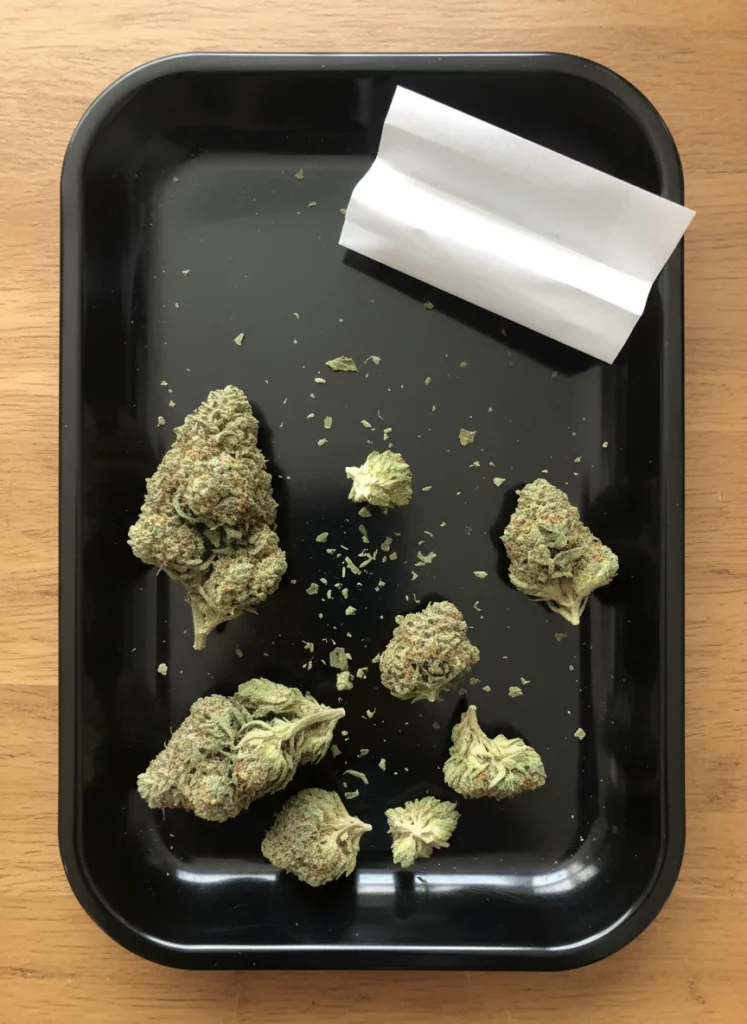
If the quality varies – say you’re splitting a bag that has some premium buds and some shake – consider mixing everything together before dividing. This ensures each person gets a proportional amount of the good stuff and the trim. It’s more work but eliminates complaints about who got the better portion.
Product Type Considerations
Splitting flower is straightforward, but edibles, concentrates, and vapes require different approaches. Edibles can be divided by piece count or total mg of THC. A 300mg package of gummies with 10 pieces can be split three ways by giving each person three pieces (90mg) and dividing the remaining piece.
Concentrates should be weighed just like flower, using a more precise scale. Cartridges are harder to split since they’re pre-filled. For carts, consider taking turns purchasing or simply each person keeps what they bought and shares during sessions. Pre-rolls can be counted and distributed evenly.
Practical Splitting Scenarios
Different social situations call for different approaches. Here’s a comparison of common scenarios:
| Scenario | Best Method | Key Consideration |
|---|---|---|
| Equal group purchase | Weight-based split | Use a scale; divide evenly |
| Someone gifting/sharing | No split needed | Gratitude and reciprocity |
| Regular smoking circle | Rotation or match system | Long-term fairness matters |
| Mixed contribution levels | Contribution-based | Calculate percentages upfront |
Understanding which method fits your situation prevents confusion and ensures everyone feels treated fairly from the start.
Cannabis Splitting Etiquette
Communicate Before, Not After
The golden rule of splitting weed is discussing the plan before anyone gets high. Once the session starts, judgment becomes clouded and disagreements feel more personal. A simple “Hey, how should we split this?” before opening the bag prevents 99% of conflicts.
Be explicit about expectations. If you’re expecting equal contribution, say so. If you’re happy to share freely, make that clear too. Assumptions lead to resentment. Direct communication might feel awkward initially, but it becomes natural once your group establishes norms.
Respect the Person Who Bought It
In cannabis culture, the person who secured the product often has final say in how it’s divided. They took the risk, spent the time, and used their connections. Even if everyone pitched in money, show respect to the buyer by letting them portion it out or at least have input on the method.
If you consistently rely on one friend to buy for the group, consider rotating that responsibility. Offering extra compensation for their effort – gas money, a few extra dollars, or covering their snacks – can go a long way toward showing appreciation.
When in Doubt, Be Generous
Cannabis culture thrives on generosity and reciprocity. If you’re unsure whether your split is fair, err on the side of giving others slightly more. This goodwill comes back around, and tight-fisted behavior gets remembered. The community operates on a shared understanding that what goes around comes around.
That said, don’t let generosity become one-sided exploitation. If someone consistently takes more than they contribute and never reciprocates, it’s fair to address that imbalance directly. Healthy friendships require mutual respect and balanced give-and-take.
Tools and Tips for Accurate Division
Invest in a quality digital scale with at least 0.1g precision for flower and 0.01g for concentrates. Keep it clean and calibrate it occasionally with a calibration weight. Store it in a protective case to prevent damage. A nickel weighs exactly 5 grams and can serve as a quick calibration check.
Use small glass jars or smell-proof bags to store each person’s portion after splitting. Label them if needed. This prevents confusion about whose is whose and keeps the product fresh until everyone takes their share home. Mason jars work well and are reusable.
For groups that split regularly, consider creating a simple shared spreadsheet tracking who contributed what over time. This is especially useful for buying clubs or roommate situations where multiple purchases happen and perfect balance isn’t expected on every transaction. Apps can also help track shared expenses.
Conclusion
Splitting weed fairly between friends ultimately comes down to clear communication, mutual respect, and choosing the right method for your situation. Whether you’re weighing out precise portions or taking a more casual rotation approach, the goal is maintaining both fairness and friendship. Remember that cannabis laws vary by U.S. state, and this content is intended for adults 21+ only in jurisdictions where cannabis is legal.


Sour Extreme: A Nice Mix of Different Genetic Types

Why Does Music Sound Better When You’re High?

Weekday Microdosing Mastery: Smart Timing for Busy Professionals

Cannabis Potency In 2025: Strongest Legal Products

Terpene Profiles and Their Influence on Cannabis Strain Effects

The Best Cannabis Products for Enjoying Movies and TV Shows

Unusual Strains and Hybrids You’ve Never Heard Of

Mall Security Showdown: Navigating Detention While Carrying Cannabis

Humidity Hacks: Keep Your Vape Cartridges Working Smoothly
All Posts
